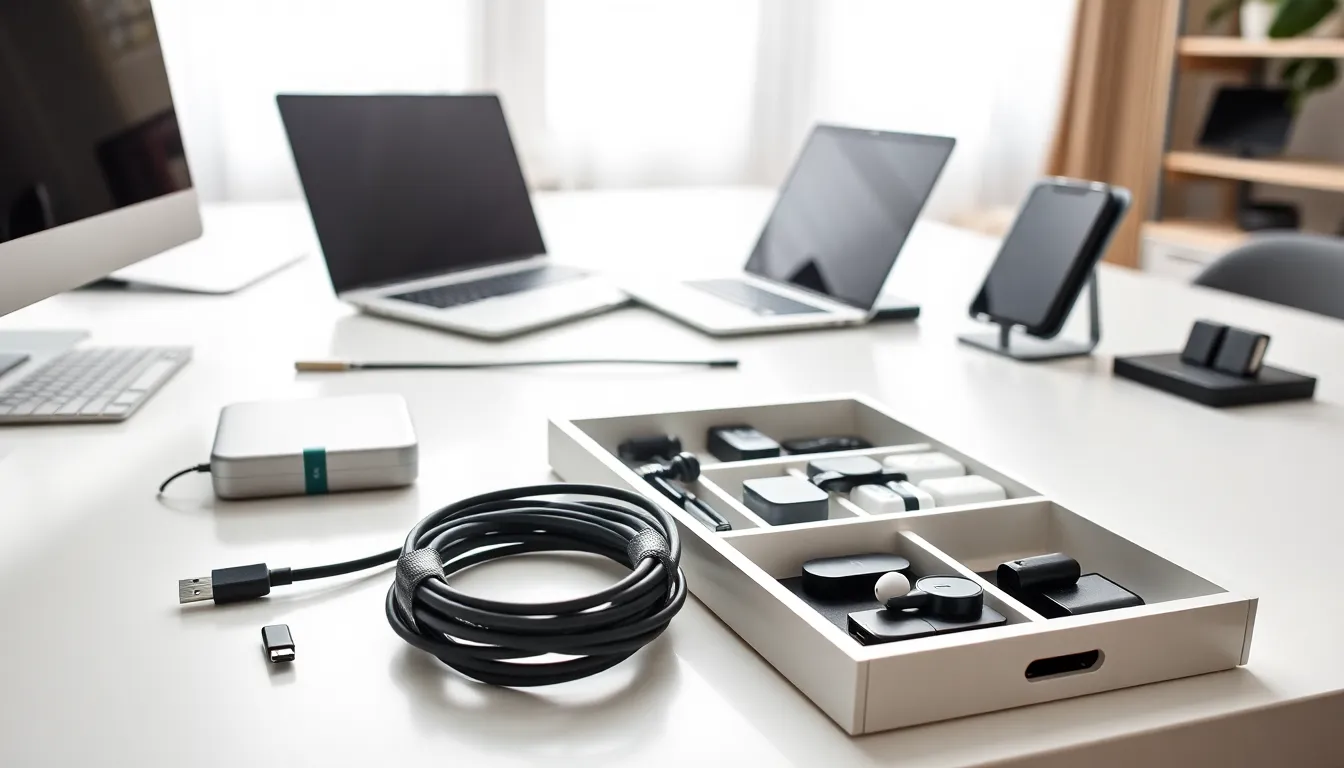
Tech accessories vs. gadgets, most people use these terms interchangeably, but they actually describe two different categories of products. Understanding the distinction matters, especially for consumers making purchasing decisions or tech enthusiasts building their ideal setup.
Accessories enhance or support existing devices. Gadgets function as standalone devices with their own purpose. This difference affects pricing, functionality, and how buyers should evaluate each product type.
This guide breaks down what separates tech accessories from gadgets, explores key examples of each, and helps readers decide which product type fits their specific needs.
Table of Contents
ToggleKey Takeaways
- Tech accessories enhance or support existing devices, while gadgets function independently with their own processors, batteries, and interfaces.
- Accessories like phone cases, charging cables, and laptop stands cost less because they complement primary devices rather than replace them.
- Gadgets such as smartwatches, tablets, and drones deliver standalone functionality and typically carry higher price tags due to complex internal components.
- Choose tech accessories when you want to protect, organize, or improve your current devices without adding new capabilities.
- The tech accessories vs. gadgets decision depends on whether your setup needs enhancement (accessories) or entirely new functionality (gadgets).
- Quality accessories often outlast gadgets, making them a cost-effective long-term investment for your tech ecosystem.
What Are Tech Accessories?
Tech accessories are products designed to work alongside a primary device. They don’t operate independently, instead, they extend, protect, or improve the functionality of another piece of technology.
Common examples of tech accessories include:
- Phone cases and screen protectors – These shield smartphones from damage but serve no purpose without the phone itself.
- Keyboard and mouse combos – They provide input for computers but can’t function alone.
- Charging cables and power banks – Essential for keeping devices running, yet useless without something to charge.
- Headphone stands and laptop risers – Organizational accessories that improve workspace ergonomics.
- Camera lenses and tripods – They enhance photography capabilities but require a camera or smartphone to use.
The defining trait of tech accessories is dependency. A USB-C cable does nothing sitting on a desk. A wireless charging pad needs a compatible phone to justify its existence. Tech accessories always answer the question: “What device does this support?”
Accessories also tend to cost less than the primary devices they complement. A $30 phone case protects a $1,000 smartphone. A $50 laptop sleeve guards a $1,500 MacBook. This value proposition makes accessories appealing, they offer protection or enhanced functionality at a fraction of the main device’s price.
Some tech accessories blur the line slightly. Wireless earbuds, for instance, require a phone or computer to stream audio. But many consider them gadgets because they contain their own processors, batteries, and software. This gray area shows why understanding tech accessories vs. gadgets requires looking at the full picture.
What Are Gadgets?
Gadgets are standalone electronic devices that perform specific functions independently. They don’t need another device to deliver their core purpose, though many can connect to phones or computers for added features.
Popular gadget examples include:
- Smartphones and tablets – Complete computing devices with screens, processors, and operating systems.
- Smartwatches and fitness trackers – They monitor health metrics and display notifications independently.
- Portable Bluetooth speakers – Play music from internal storage or streaming without requiring external equipment.
- Digital cameras – Capture photos and videos as self-contained units.
- E-readers – Store and display books without connecting to other hardware.
- Drones – Fly and record footage using onboard systems.
Gadgets contain their own power sources, processing capabilities, and user interfaces. A smartwatch tracks steps, displays the time, and sends alerts, all without touching a smartphone. Yes, pairing it with a phone unlocks more features, but the core functionality exists independently.
This independence is what separates gadgets from tech accessories. A gadget answers the question: “What does this do on its own?”
Gadgets typically carry higher price tags than accessories. They require more engineering, include more components, and deliver complete experiences rather than supplementary ones. Consumers buying gadgets are investing in new capabilities, not enhancements to existing devices.
The tech accessories vs. gadgets comparison becomes clearer here. Accessories support. Gadgets deliver.
Main Differences Between Tech Accessories and Gadgets
Several key factors distinguish tech accessories from gadgets. Here’s a breakdown of the primary differences:
Functionality and Independence
Gadgets work alone. Accessories require a host device. A drone flies without connecting to anything. A phone mount does nothing without a phone.
Pricing
Gadgets cost more due to internal components like processors, batteries, and displays. Accessories use simpler materials and designs, keeping prices lower. A $200 smartwatch (gadget) outprices a $25 watch band (accessory) significantly.
Complexity
Gadgets include software, firmware updates, and user interfaces. Tech accessories rarely require setup beyond physical attachment or basic pairing. Plugging in a USB hub takes seconds. Configuring a new tablet takes considerably longer.
Purpose
Accessories enhance, protect, or organize existing technology. Gadgets introduce new functions or replace existing devices entirely. Buying a new laptop stand improves comfort. Buying a new laptop changes the entire computing experience.
Lifespan Considerations
Accessories often outlive their primary devices. A quality leather laptop bag works for a decade across multiple computers. Gadgets face obsolescence as technology advances, a five-year-old smartphone struggles with modern apps.
Understanding these differences helps consumers make smarter purchases. The tech accessories vs. gadgets distinction isn’t about quality or value. It’s about understanding what role each product plays in a tech ecosystem.
When to Choose Accessories Over Gadgets
Knowing when to buy tech accessories instead of gadgets saves money and prevents clutter. Here are scenarios where accessories make more sense:
Protecting Existing Investments
A new phone doesn’t need a companion gadget. It needs a solid case, a screen protector, and maybe a car mount. These tech accessories extend the phone’s lifespan without adding complexity.
Improving Ergonomics
Laptop stands, external keyboards, and monitor arms transform workspaces. These accessories enhance comfort without requiring users to replace their primary devices.
Solving Specific Problems
Running low on ports? A USB hub fixes that. Need better audio during calls? A quality headset helps. Accessories address targeted issues efficiently.
Budget Constraints
When money is tight, accessories offer affordable upgrades. A $60 mechanical keyboard improves typing more noticeably than a marginally better laptop costing $500 extra.
Gadgets make sense when users need entirely new capabilities. Want to track fitness metrics? Buy a smartwatch. Need portable entertainment? Grab a tablet. But when the goal is optimization rather than expansion, tech accessories deliver better value.
The tech accessories vs. gadgets decision comes down to one question: Does the current setup need enhancement, or does it need replacement? Accessories handle the first scenario. Gadgets handle the second.