In a world where everyone’s a photographer, capturing that perfect shot shouldn’t feel like a circus act. Enter adjustable phone tripods—the unsung heroes of mobile photography! These nifty gadgets not only keep your phone steady but also let you unleash your inner Spielberg without the need for a film crew.
Imagine setting up your phone for that epic group selfie or live streaming your cat’s latest antics without the fear of shaky hands ruining your masterpiece. With adjustable heights and flexible angles, these tripods are like the Swiss Army knives of the photography world. Whether you’re a social media influencer or just trying to document your life’s most mundane moments, an adjustable tripod could be your new best friend. So why not elevate your content game and give your phone the support it deserves?
Overview of Adjustable Phone Tripods
Adjustable phone tripods represent a crucial addition for photographers and content creators. These devices enhance stability, enabling crisp shots even in challenging conditions. Flexibility in height and angle adjustments allows users to achieve the perfect frame without hassle.
Most adjustable phone tripods feature lightweight materials for easy portability. They often include universal mounts that accommodate various smartphone sizes. Users appreciate the ease of setup, making them ideal for spontaneous photo opportunities.
Compatibility plays a significant role in the selection of a tripod. Understanding phone specifications ensures optimal usage. Brands like Manfrotto and Joby offer robust options catering to different styles and needs.
Height ranges typically vary from 10 inches to 60 inches, depending on the model. Such versatility supports various shooting scenes, whether it’s a low-angle landscape or a high overhead shot. Different types offer additional features, like built-in Bluetooth remote controls for seamless operation.
Users often cite durability as a key factor when choosing a tripod. Many models resist wear and tear from outdoor use. Materials like aluminum and reinforced plastics contribute to longevity without sacrificing functionality.
Some advanced models incorporate features like 360-degree rotation, further enhancing creative possibilities. This capability allows for dynamic video capture and diverse photographic techniques. Crowds and busy environments pose no problem with equipped tripods, maintaining focus where desired.
Investing in an adjustable tripod reveals significant benefits for both casual users and professionals. Consistent quality in images reflects the effectiveness of these tools. Building a collection of photography accessories remains essential for elevating overall content quality.
Key Features to Consider
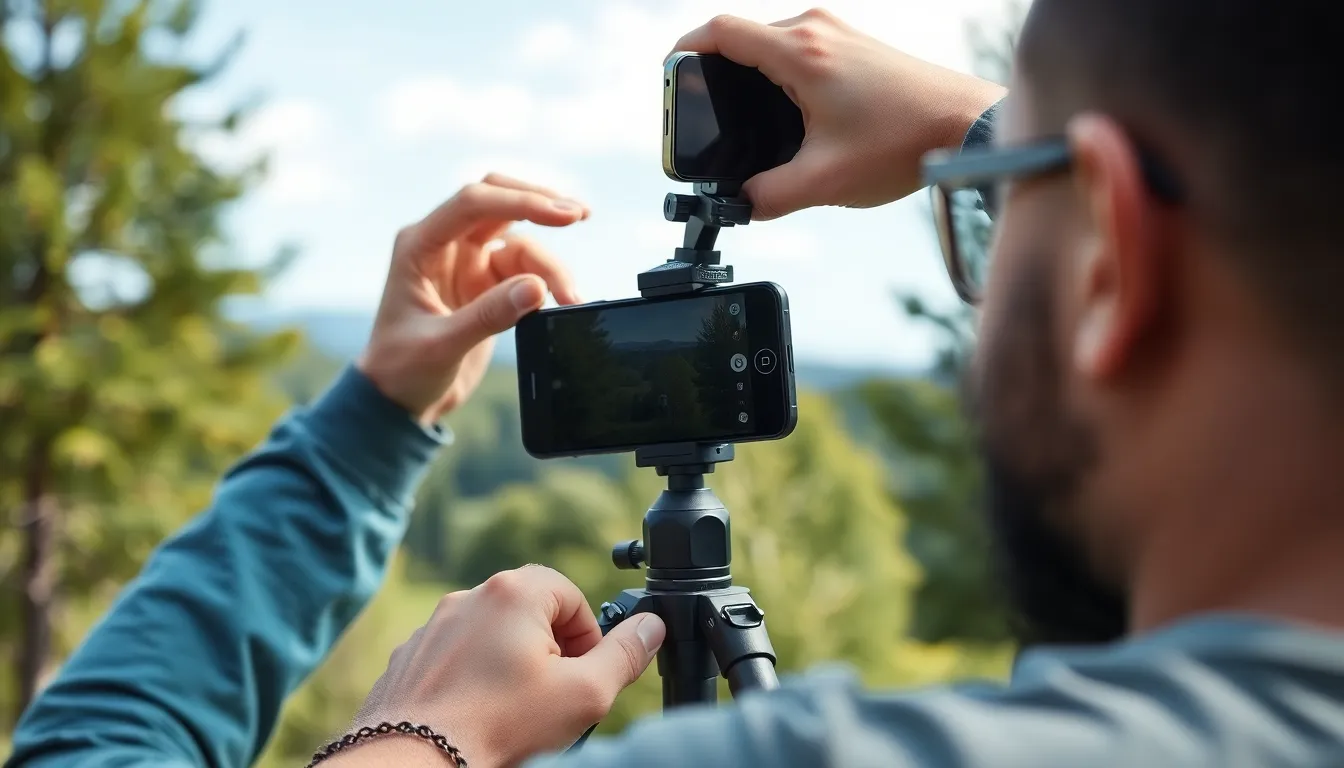
Adjustable phone tripods offer essential features that enhance photography experiences. Buyers should evaluate several factors to ensure effective usage.
Height Adjustment
Height adjustment capability ranges from 10 to 60 inches, accommodating diverse shooting needs. Many tripods incorporate telescoping legs, which enable seamless transitions between different heights. Users benefit from adjustable heights for group shots or low-angle photography. Finding a tripod that supports the desired height range becomes crucial for maximizing versatility in various environments.
Stability and Build Quality
Stability stands as a defining feature of reliable tripods. Many models utilize materials like aluminum and reinforced plastic, ensuring durability and robustness. A solid tripod minimizes vibrations during shooting, resulting in sharp, clear images. Brands known for quality, such as Manfrotto and Joby, offer options designed to withstand outdoor conditions. Selecting a tripod with excellent build quality guarantees longevity even with frequent use.
Portability and Weight
Portability significantly impacts usability for on-the-go photographers. Lightweight designs enable easy transport, making spontaneous captures more convenient. Users often favor models that collapse compactly, fitting comfortably in bags or carrying cases. Weighing as little as 1 pound, some tripods encourage effortless carrying without sacrificing stability. Evaluating weight alongside design enhances the overall user experience.
Types of Adjustable Phone Tripods
Adjustable phone tripods come in various types, each designed to meet specific needs. Understanding these options helps in selecting the right one for different photography scenarios.
Mini Tripods
Mini tripods are compact and lightweight, ideal for traveling. These small models typically range from 5 to 12 inches in height, making them easy to carry in bags or pockets. Users can quickly set them up on desks or tables for stable shots. Most mini tripods feature universal mounts, accommodating different smartphone sizes. These tripods prove useful for capturing close-up shots or conducting video calls while maintaining a professional appearance. Fun fact: many models have adjustable legs for added flexibility, enhancing usability across various surfaces.
Full-Size Tripods
Full-size tripods offer versatility and stability for a wide range of shooting conditions. Their height generally varies from 30 to 60 inches, providing ample elevation for group photos or landscape shots. Photographers appreciate full-size tripods as they ensure solid support, minimizing vibrations and resulting in sharper images. Also, many feature adjustable legs and quick-release plates for seamless transitions between setups. Users find these tripods suitable for both indoor and outdoor photography, making them an excellent investment for serious content creators. Options from known brands often include features like bubble levels to ensure accurate positioning.
Flexible Tripods
Flexible tripods adapt to numerous environments and shooting angles. These models feature bendable legs that can wrap around poles, tree branches, or uneven surfaces. Their height can range from 12 to 30 inches, offering a balance between portability and functionality. Photographers enjoy the freedom that flexible tripods provide, enabling unique camera angles and perspectives. Models such as the GorillaPod are popular for their durability and versatility. With grip-friendly legs, users can stabilize their devices almost anywhere, making these tripods a favorite among adventurous shooters.
Recommended Adjustable Phone Tripods
Selecting the right adjustable phone tripod can elevate photography experiences. Here are some top recommendations:
Budget-Friendly Options
Several affordable tripods deliver quality without breaking the bank. The UBeesize Phone Tripod stands out with flexible legs, providing adaptability for different angles. It also features a universal mount that fits most smartphones. The AmazonBasics Lightweight Tripod is another great choice, offering sturdy support with a height range of 50 inches. Both options prove that quality photography gear doesn’t always come with a hefty price tag.
Premium Selections
Investing in higher-end tripods often brings advanced features. The Manfrotto BeFree Live Tripod ensures exceptional stability with its aluminum build and smooth pan-tilt head, perfect for video capture. Another standout, the Joby GorillaPod 5K, includes flexible and grip-friendly legs that adapt to various surfaces. These premium models cater to professionals, enhancing shot quality and versatility during any shooting session.
Adjustable phone tripods are invaluable tools for anyone looking to elevate their photography game. With their ability to provide stability and flexibility, these tripods empower users to capture stunning images and videos in various settings. Whether for casual snaps or professional content creation, the right tripod can make all the difference.
Investing in a quality adjustable tripod not only enhances the overall shooting experience but also opens up a world of creative possibilities. As mobile photography continues to grow, having a reliable tripod becomes essential for achieving the best results. Embracing this versatile accessory can transform how users approach their photography, leading to sharper images and more engaging content.